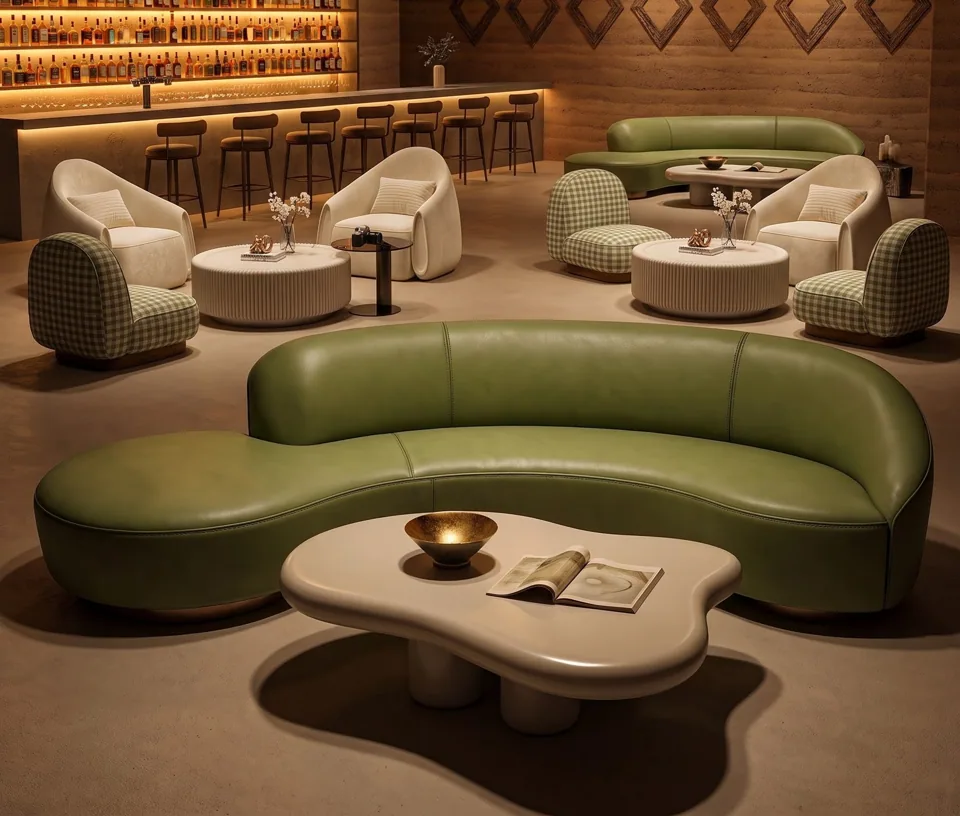
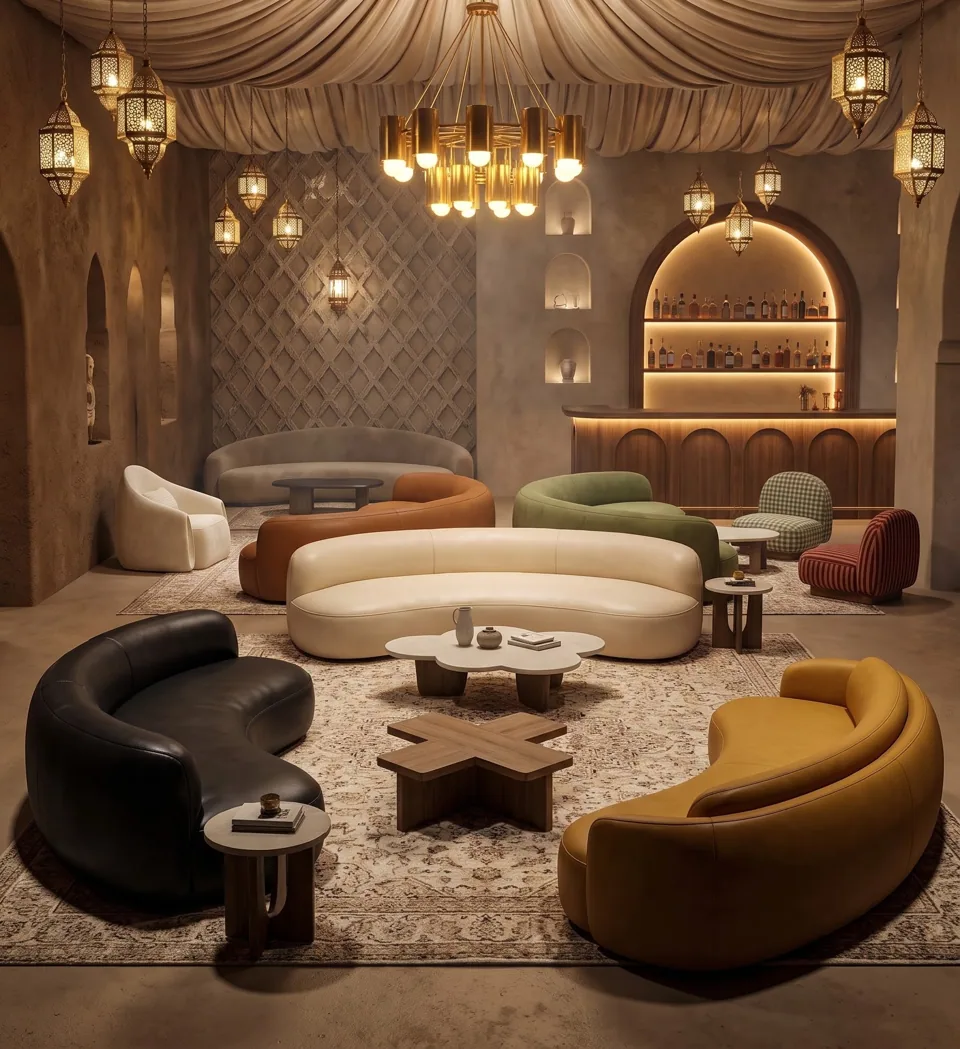
Full-Grain, Top-Grain, Bonded or Faux? Choosing Leather for Commercial Bar Seating (2026)
How full-grain, top-grain, corrected, split and bonded leather compare with PU and vinyl for bar and lounge seating, plus how to care for leather in service.
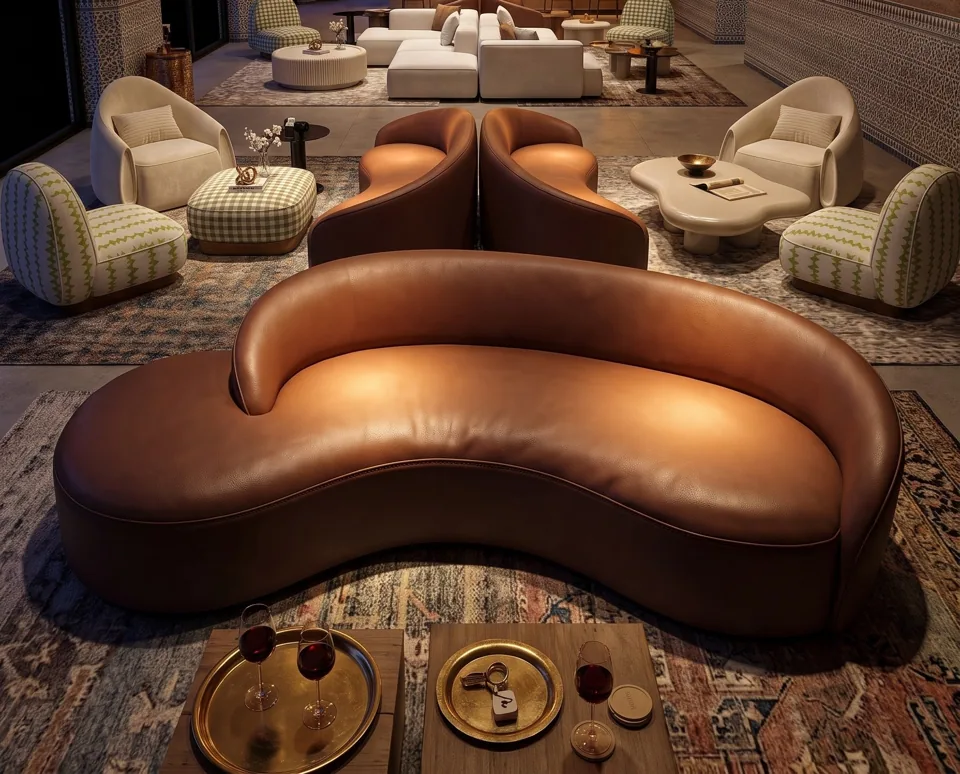
Short answer: For bar and lounge seating, choose a genuine leather with a protective surface finish, usually a corrected or top-grain hide with a pigmented or semi-aniline finish, or a contract-grade vinyl where cleaning and budget come first. Full-grain aniline is the most beautiful option and the least forgiving of spills. Never put bonded leather on a commercial seat: its surface layer is designed for light residential use and tends to peel.
Leather is the defining material of the cocktail bar, the cigar lounge and the whiskey room. It is also the material most often mis-specified, because the words used to sell it ("genuine", "top-grain", "Italian", "vegan leather") describe very different products. This guide explains what each term actually means, how each one behaves under daily commercial use, and how to specify and care for it.
What are the main types of leather used in upholstery?
A cowhide is thick, and tanneries split it horizontally into layers. The outer layer, which carries the natural grain, is the strongest and most valuable. What happens to that layer next determines what the leather is called.
- Full-grain leather keeps the complete outer grain surface. It is not sanded, so the tight fibre structure near the surface stays intact. That makes it the strongest and most breathable grade. Natural marks such as scars, insect bites and growth lines remain visible.
- Top-grain leather is also cut from the outer layer, but the surface has been lightly sanded or buffed to remove imperfections. In the US furniture trade the term is used loosely and often overlaps with corrected grain.
- Corrected-grain leather has been buffed more heavily, then coated with a pigmented finish and usually embossed with an artificial grain pattern. It looks uniform from hide to hide and resists stains well, though it feels less natural.
- Split leather comes from the lower layers of the hide. It has no natural grain, so for upholstery it is usually coated with a polyurethane film (sometimes sold as "bicast"). The coating can crack or wear through on high-contact areas.
- Bonded leather is not a hide at all. It is made of leather fibres and scraps mixed with a binder, formed onto a backing, and finished with a polyurethane surface. The actual leather content varies widely by manufacturer and is often a minority of the material.
Aniline, semi-aniline or pigmented: why the finish matters more than the grade
How a hide is finished affects its behaviour in a bar more than which layer it came from.
- Aniline leather is dyed through with soluble dyes and has little or no protective topcoat. It feels soft and warm and develops a rich patina, but it absorbs liquids and body oils and marks easily.
- Semi-aniline leather has a light pigmented or protective coat over the dye. It keeps much of the natural look while resisting spills noticeably better.
- Pigmented (protected) leather carries a durable pigmented topcoat. Colour is even, spills bead on the surface, and it tolerates frequent cleaning. Most automotive and heavy-contract leathers belong here.
Comparison: leather and faux-leather options for bar seating
| Material | Look and feel | Spill and stain resistance | Wear in heavy use | Typical use in bars |
|---|---|---|---|---|
| Full-grain aniline | Most natural; develops patina | Low: absorbs liquids | Very durable hide, but surface marks quickly | Low-traffic members' rooms, statement chairs |
| Full-grain or top-grain semi-aniline | Natural with light protection | Moderate | Very good | Club chairs, booths in cocktail and whiskey bars |
| Corrected-grain, pigmented | Uniform, slightly firmer | High | Very good | High-traffic booths, hotel bars, restaurant bars |
| Split with PU coating | Uniform, plastic-like when worn | High at first | Coating can crack or peel | Budget pieces; avoid on seat decks |
| Bonded leather | Leather-like when new | Moderate | Poor: surface tends to flake and peel | Not recommended for commercial seating |
| Polyurethane (PU) faux leather | Soft, leather-like | High | Varies widely by grade; check backing and abrasion data | Mid-budget seating; animal-free projects |
| Contract vinyl (PVC) | Wide range, from glossy to leather-grain | Very high; tolerates harsh cleaning | Excellent in contract grades | Diners, sports bars, very high turnover |
For woven fabrics and coated fabrics in North America, abrasion is commonly quoted in Wyzenbeek double rubs (ASTM D4157), and the Association for Contract Textiles guideline for heavy-duty contract seating is 30,000 double rubs. In Europe and the UK the Martindale test (ISO 12947) is used instead. Leather is not normally rated this way, so judge it on finish, thickness and the tannery's contract specification.
Why we tell clients to avoid bonded leather
Bonded leather is attractive on a quote because it is cheap and looks like leather when new. In a bar it tends to fail at the places guests touch most: the front edge of the seat, the top of the back and the arm fronts. The polyurethane surface separates from the fibre backing and flakes off, and it cannot be repaired. The seat then has to be re-covered, which usually costs more than specifying a durable material in the first place.
If the budget will not stretch to genuine leather, a contract-grade vinyl or a well-backed PU from a contract supplier is almost always the better choice.
PU versus vinyl: which faux leather is right?
Both are plastic coatings on a fabric backing, and they behave differently.
- PU (polyurethane) is softer and more breathable and drapes more like leather. Quality varies widely: cheap PU can crack or peel within a couple of years, especially where it is exposed to heat, sunlight and body oils.
- PVC vinyl is tougher, more resistant to harsh cleaning chemicals and generally better for very high-turnover seats. It feels cooler and less leather-like, though modern contract vinyls are far better than the shiny diner vinyl many people remember.
Ask for the backing type, the abrasion rating, the cleaning and disinfectant guidance and the flammability data before you approve any faux leather.
How much leather does a booth or club chair need?
Leather comes as whole hides, not rolls, and every hide has an irregular outline, thinner belly areas and natural marks that cutters work around. That makes waste much higher than with roll goods. A full cowhide commonly yields somewhere around 45-55 sq ft (4.2-5.1 m²), and cutting waste is often in the region of 15-25%, depending on the hide grade and the pattern.
If you are supplying your own leather (COL), do not estimate from a residential sofa. Send the approved drawings to your upholsterer and ask for a hide count that includes waste. For our Stillroom Tufted Leather Booth and other deep-buttoned designs, allow extra: buttoning takes up more leather than a flat panel because each pillow folds material into the button.
Step-by-step: how to specify leather for a bar project
- Define the use. How many hours a night are seats occupied? Is food served at the seat? Is this a cigar lounge? Heavier use calls for protected finishes.
- Choose the finish first, then the grade. For most bars, semi-aniline or pigmented. Use aniline only where you want patina and accept marks.
- Request samples and a technical sheet. Ask for thickness (upholstery leather is commonly around 1.0-1.4 mm), finish type, colour-fastness and cleaning guidance.
- Check flammability requirements. Your market's rules apply to the whole composite: cover, interliner and foam. In the US, CAL TB 117-2013 (adopted nationally under 16 CFR 1640) is the usual baseline for upholstered seating; in the UK, contract seating is typically tested to BS 7176. Your fire officer decides what applies to your venue.
- Approve a cutting sample or a full sample piece. Colour varies between hide lots, so approve against the production lot.
- Order spare material. Keep a few square feet from the same lot for future repairs.
How should you care for leather seating in a bar?
Daily and weekly care matters more than the grade you buy.
- Wipe spills immediately with a soft, damp cloth. Blot rather than rub.
- Clean weekly with a pH-neutral cleaner made for finished leather. Test new products on a hidden area.
- Avoid alcohol-based sanitizers, bleach, ammonia and all-purpose sprays. Over time they strip the topcoat and dry the leather, leading to cracking.
- Condition semi-aniline and aniline leathers every few months, more often in dry, air-conditioned rooms.
- Keep seats away from heat and direct sun. Radiators, heaters and south-facing windows dry and fade leather.
- Rotate loose cushions on sofas and lounge chairs so wear is spread evenly.
- Repair small scuffs early. A leather technician can recolour worn edges far more cheaply than re-covering a seat.
Common mistakes
- Specifying aniline for a high-turnover cocktail bar. It will mark within weeks. That is fine if you love patina, but it is a problem if you expect it to stay pristine.
- Accepting "genuine leather" without asking which layer. The term can legally cover split and coated leathers in many markets.
- Choosing bonded leather to hit a budget. The re-cover bill usually arrives within a few years.
- Cleaning with whatever spray is behind the bar. Alcohol and solvent cleaners are the fastest way to ruin a protected finish.
- Ordering COL without a hide count. Running short mid-production means a second lot that may not match.
- Ignoring the composite for fire testing. A compliant leather on a non-compliant foam is not a compliant seat.
FAQ
Is top-grain leather good for restaurant and bar booths?
Yes, provided it carries a semi-aniline or pigmented finish. Top-grain and corrected-grain leathers with a protective coat are the most common choice for commercial booths because they balance natural appearance with spill resistance. See our leather booths collection for typical constructions.
Does leather absorb cigar smoke?
Finished leather absorbs far less odour than open-weave fabrics because its surface is relatively sealed. Aniline leather absorbs more than pigmented leather. Ventilation, not upholstery, is still the main factor in controlling smoke odour.
How long does commercial leather seating last?
It depends on use, finish and care rather than a fixed number of years. A well-maintained protected leather booth in a busy bar can serve for many years before it needs re-covering, and hardwood frames can usually be re-upholstered rather than replaced.
Is vegan leather better for the environment?
Not automatically. "Vegan leather" usually means PU or PVC, which are plastics. Some newer bio-based materials exist, but performance data for heavy commercial use is still limited, so ask for abrasion, cleaning and flammability data before specifying them.
Can you mix leather and fabric on the same booth?
Yes, and it is a common commercial solution: leather or vinyl on the seat, where wear and spills concentrate, and velvet or bouclé on the back for warmth. Our Brasserie Rail Leather Banquette can be built either way.
Tell us about your bar or lounge: a floor plan, seat count and a few reference images are enough to start. We reply with a seating proposal and a quote.
Request a quote